 Story Mode Guy
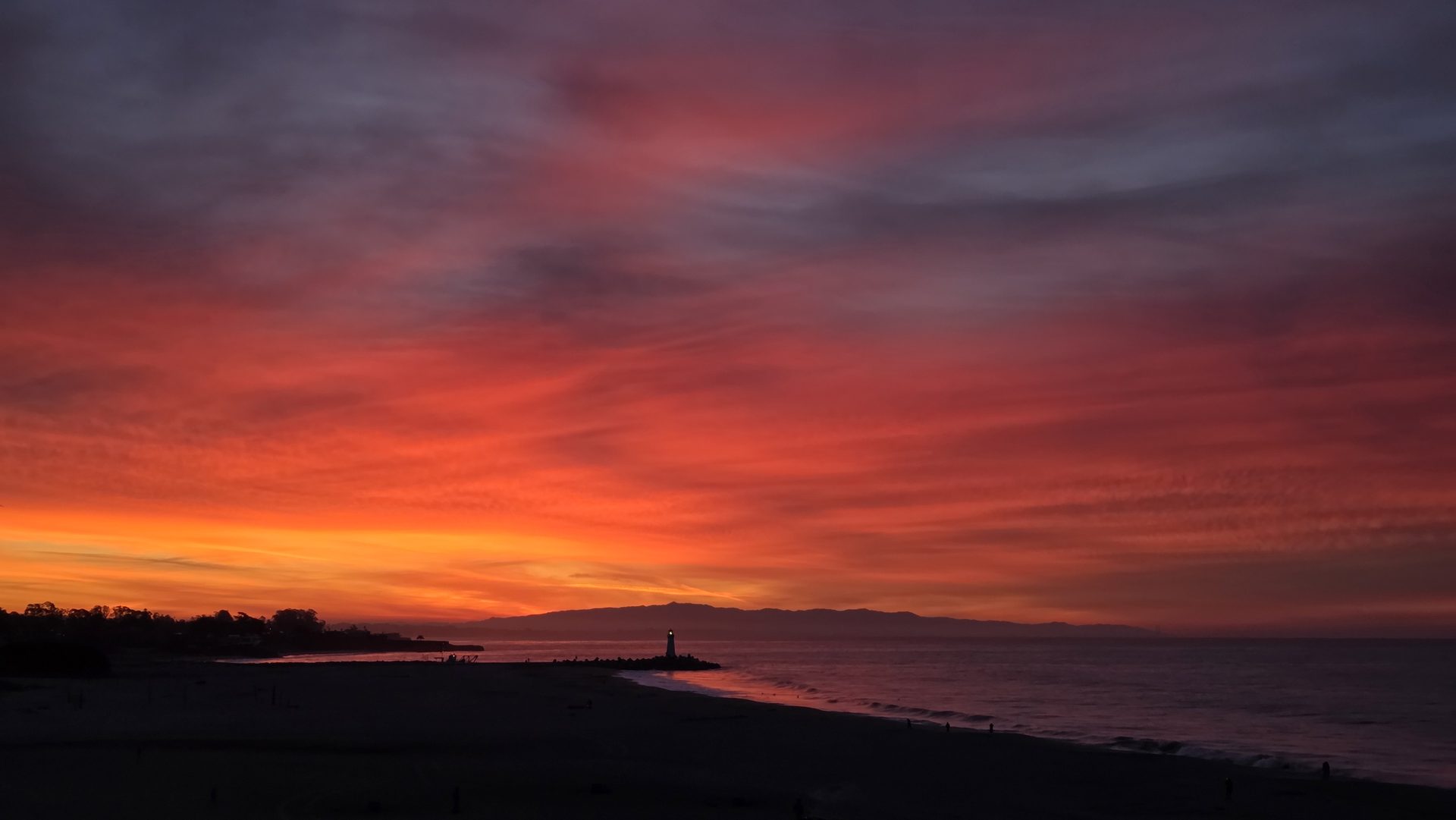
If you want to learn how to shoot silhouettes, here's the good news: it's the easiest dramatic photo there is, and the camera's usual instincts are what get in your way. A silhouette is just a dark subject against a bright sky, and with a Santa Cruz sunset to work with, you can get a gallery-worthy frame in about five minutes once you understand one rule: expose for the sky, not the subject.
Why silhouettes work
When you strip away color, texture, and detail, only shape remains. The viewer reads the outline instantly, which is why a person on a cliff, a pelican over the water, or the wharf pilings against orange sky feels so bold. A silhouette is a graphic, and it only works if the shape is clear.
Expose for the bright part
Your camera normally tries to make everything medium gray. Point it at a bright sunset with a person in front and it will brighten the whole scene so the person is visible, which washes out the sky. You want the opposite.
- Meter on the sky. Point at the brightest area near, but not directly at, the sun. Lock exposure.
- Recompose with your subject in the frame, keeping that locked exposure.
- Dial in negative exposure compensation, usually -1 to -2 stops, until the sky looks rich and the subject goes fully black.
On an iPhone, tap the sky, then slide the little sun icon down until the subject is a solid dark shape. On a camera, spot metering on the sky makes this automatic.
Starting settings
These are my usual numbers for a sunset silhouette, and they're a starting point rather than gospel:
- Mode: aperture priority with -1 stop compensation, or manual.
- Aperture: f/8 to f/11 for a crisp edge and a sun star if the sun is in frame.
- ISO: 100 to 200. You have plenty of light at sunset, so keep noise out.
- Shutter speed: whatever balances, but stay above 1/250 for people in motion.
- White balance: try "cloudy" or "shade" to warm up the sky, or set it manually around 6500K for richer oranges.
- File format: shoot RAW if you can, so you can deepen the sky later.
Choose a subject with a readable outline
This is where most silhouettes fail. If the shape is muddy, nothing saves it. Look for subjects with distinct edges and daylight between the parts: a person in profile with arms apart, a surfer carrying a board, a dog mid-jump, a lone tree, a lifeguard tower. Overlapping limbs merge into a blob, so ask your subject to separate their arms from their body and turn sideways. Faces in profile work better than faces head-on.
Take full control of your camera
A plain-English guide to manual mode, covering aperture, shutter speed, ISO, and exposure compensation so you can nail tricky light on purpose.
Get the manual-mode guide ($27) →Placement and timing
Position yourself low so the subject stands against sky rather than against distant hills or buildings, which would swallow the edge. Crouch on the beach and shoot upward at a slight angle. Then wait. The best color usually arrives just after the sun drops, in the ten to twenty minutes of afterglow, when the sky turns pink and orange and the contrast is still high. Many people pack up too early. Stay put.
If you want the sun in the frame, partially hide it behind your subject, a tree trunk, or a cliff edge. This keeps the glare from blowing out and often creates a lovely starburst when you stop down.
Common mistakes
- Letting autofocus hunt. A dark subject confuses focus. Tap to focus on the edge of the subject, or use manual focus.
- Wrong exposure. If the subject has detail, you're too bright. Lower exposure until it's solid.
- Cluttered backgrounds. One strong shape against clean sky beats several competing ones.
- Dirty lens. Salt spray makes ugly flare at the beach. Wipe it before you shoot.
Finishing in editing
A little goes a long way. Pull shadows and blacks down to confirm the subject is truly dark, add a touch of contrast, and boost sky saturation or vibrance modestly. Keep the horizon level, because a tilted one cheapens the shot.
Once you shoot silhouettes a couple of times, you start seeing them everywhere, in hallways, windows, and fog. To see how I handle coastal light, have a look through my gallery.