 Story Mode Guy
The first time I lifted a drone off the ground, my palms were sweating over a thousand-dollar piece of plastic. If you want to know how to fly a drone without that knot in your stomach, the answer is boring and reassuring: preparation does ninety percent of the work. Modern beginner drones are far more forgiving than their reputation suggests. Here is the calm, step-by-step version I wish someone had handed me.
Before you leave the house
Charge every battery the night before, and charge the controller and your phone too. Then update the drone's firmware and the app while you are on Wi-Fi. Nothing ruins a first flight like a forced update in a parking lot.
Check the rules for where you plan to fly. In the US, recreational flyers generally need to pass a short safety test and follow community guidelines, and you should stay out of restricted airspace around airports. Rules change, so verify the current requirements with the FAA before you go. Your app's map will flag many restricted zones, but treat it as a helpful hint, not a legal guarantee.
Pick a boring place
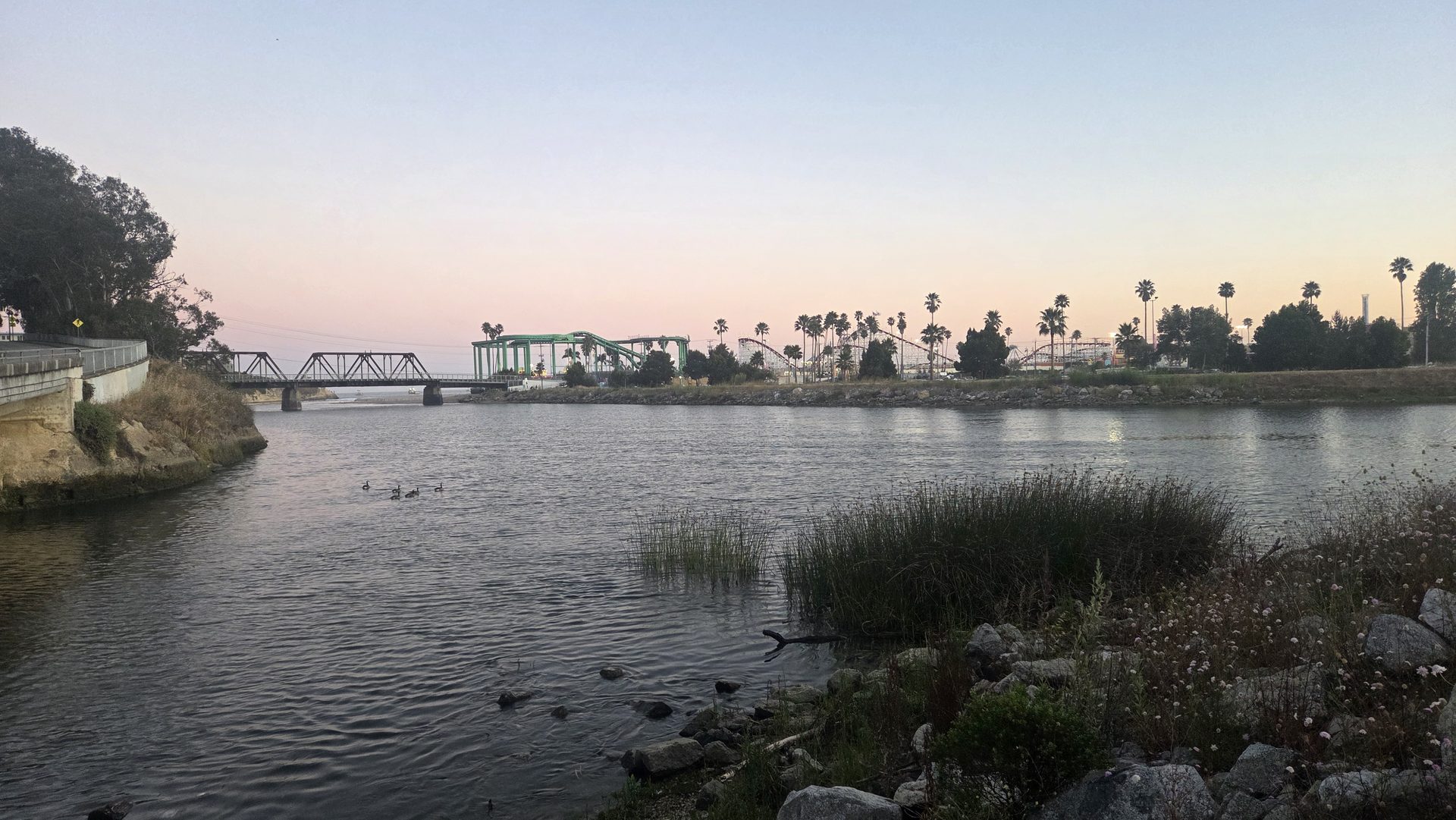
Your ideal first spot is a big, flat, open field with no trees, power lines, or crowds. A quiet park on a calm morning is perfect. Early morning is usually best because wind tends to build through the afternoon, especially near the coast. Here in Santa Cruz, a gorgeous cliff-top view is exactly the wrong place to learn, since gusts and fog roll in fast. Save the scenery for flight ten.
The pre-flight checklist
I run the same short routine every time. It takes two minutes and it has saved me more than once.
- Props are undamaged and spin freely, with no nicks or cracks.
- Battery is fully seated and the controller is charged.
- Remove the gimbal cover and check the lens is clean.
- Power on the controller first, then the drone, and let it find GPS. Wait for a solid satellite lock, usually ten or more satellites.
- Confirm the home point has been recorded, and that Return-to-Home altitude is set above the tallest obstacle nearby.
- Check the wind reading in the app. If it is anywhere near your drone's limit, stay home.
Take off and just hover
Stand behind the drone with it facing away from you. Use the automatic takeoff if your model has it, and let it climb to about five feet. Then do nothing. Hovering is a skill. Watch how the drone holds itself in place, and notice how small stick movements create small reactions.
Learn the sticks before you chase anything. The left stick controls height (up and down) and rotation (yaw). The right stick moves the drone forward, back, left, and right. Practice gentle squares: forward, right, back, left, then land. Aim for slow and smooth, not fast and clever.
Common beginner mistakes
- Flying too far, too soon. Stay within sight at all times. If you cannot clearly see the drone, you are too far away.
- Losing orientation. When the drone faces you, left and right feel reversed. Rotate it back to face away if you get confused.
- Big stick movements. Tiny inputs work. Think steering a boat, not driving a go-kart.
- Ignoring the battery. Start heading home at around thirty percent, never at five.
- Flying with the camera first. Learn to fly before you try to film. Trying both at once is how drones end up in trees.
Landing like you mean it
Bring the drone back over your clear landing area, descend slowly, and hold the stick down until the motors stop. Better yet, hover at head height and catch it only if your model and its manual explicitly support that. Otherwise, set it on flat ground. Land with a comfortable battery margin so you are never rushing the most delicate part of the flight.
Skip the guesswork on your first month
My drone library packs the field-tested guides I use for flying, filming, and staying safe into clear, practical PDFs.
See the drone library →Your first week of practice
Do short flights, five to eight minutes each, rather than draining a battery on day one. On flight one, hover and land. On flight two, fly your slow square at different heights. On flight three, practice rotating the drone while moving, which is the foundation for every smooth camera move. By flight five, try a simple slow push forward while tilting the camera down, and you will already be getting footage you are proud of.
Keep a few notes after each outing. What did the wind do? How long did the battery really last? Which moment felt shaky? Those small observations turn nervous flying into instinct faster than any gadget.
Nobody feels confident at the start, and that is fine. Fly slowly, stay in the open, respect the rules, and the confidence arrives on its own. When you are ready to see what good aerial work looks like, my gallery is a good place to start dreaming.